








PROEXPORT Case Study

Refurbishment of a Grinding Roller with Spiral Grooves

Refurbishment of a steel abrasive-belt guide roller used in a wide-belt sander. The worn working surface and damaged grooves required turning the working section from Ø250 to Ø245 mm, refurbishing the journals, re-machining the spiral grooves and final dynamic balancing.
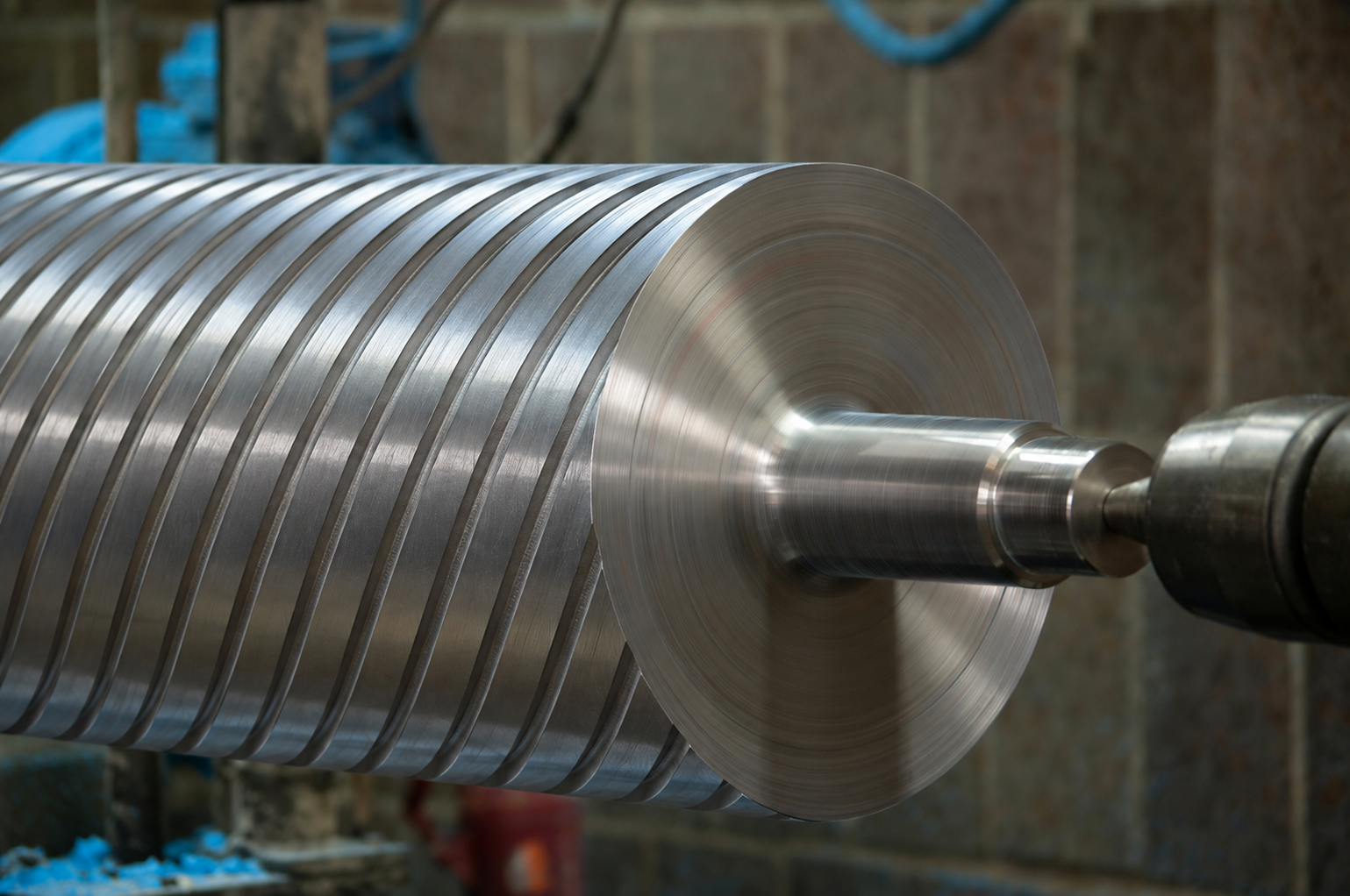
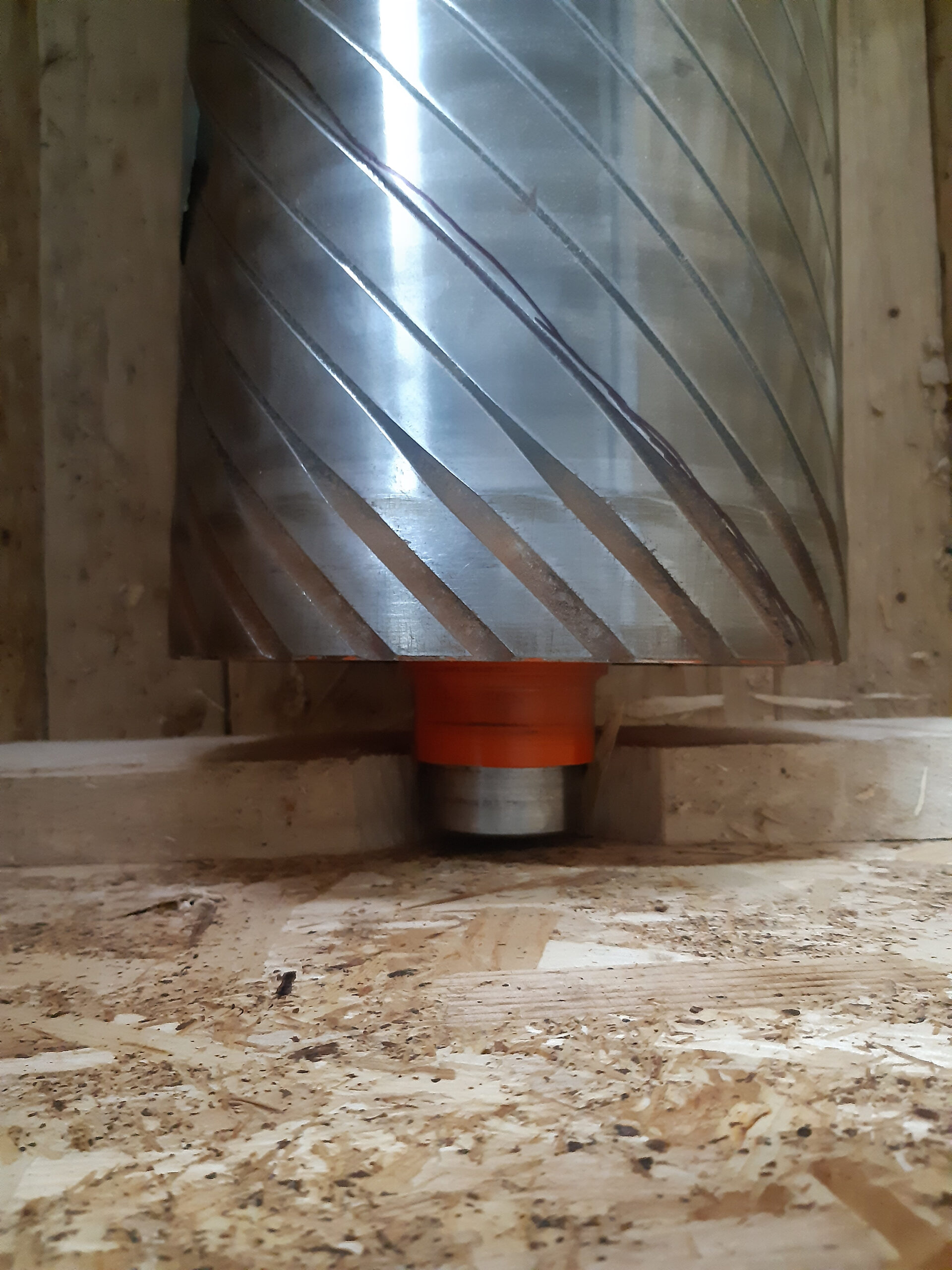
Industry: furniture / woodworking Abrasive-belt guide roller Refurbishment + grooving Poland
Reconditioned steel guide roller for abrasive belts with spiral grooves
Working diameter Ø250 → Ø245
Condition Before Refurbishment

Worn Surface and Worn Spiral Grooves

Abrasive belt guide roller before reconditioning

The abrasive-belt guide roller arrived for refurbishment with a worn working surface and worn spiral grooves.Before the grooves could be re-machined to the geometry supplied by the customer, a suitable base surface first had to be prepared.

The starting point was a working section Ø250 mm in diameter and 1460 mm long. Before further machining, it was necessary to verify whether the roller design and wall thickness allowed the worn material layer to be removed.

Initial diameter Ø250 mm
Length of the working section 1460 mm long
Tube wall thickness 20 mm
End-plate thickness 25 mm
Roller Function Guiding the abrasive belt
Surface condition Worn spiral grooves
Key Technical Decision
Ø250 → Ø245
5 mm removed from the overall roller diameter
2.5 mm of material removed radially per side
Assessment Before Machining

First, We Had to Verify Whether the Roller Could Be Refurbished Further

The surface wear was extensive enough that restoring the spiral grooves correctly required the working section to be turned first. The planned scope meant reducing the diameter from Ø250 to Ø245 mm. Ø250 to Ø245 mm.

Before starting this operation, the design of the specific roller and the feasibility of further machining with the existing wall thickness were verified. Only after this assessment was the proposed change presented to the customer and approval obtained to continue.

The diameter change also affected the roller mass, so the decision was agreed with the customer before the next refurbishment stages were carried out.

Important Reducing the diameter by 5 mm was a solution for this specific roller. The permissible machining allowance must always be assessed individually based on the component design and condition.
Scope of Work

Grinding Roller Refurbishment — Step by Step

Once further machining had been confirmed as feasible, the refurbishment itself began. The scope covered the working surface, journals, restoration of the spiral grooves and final dynamic balancing of the roller.
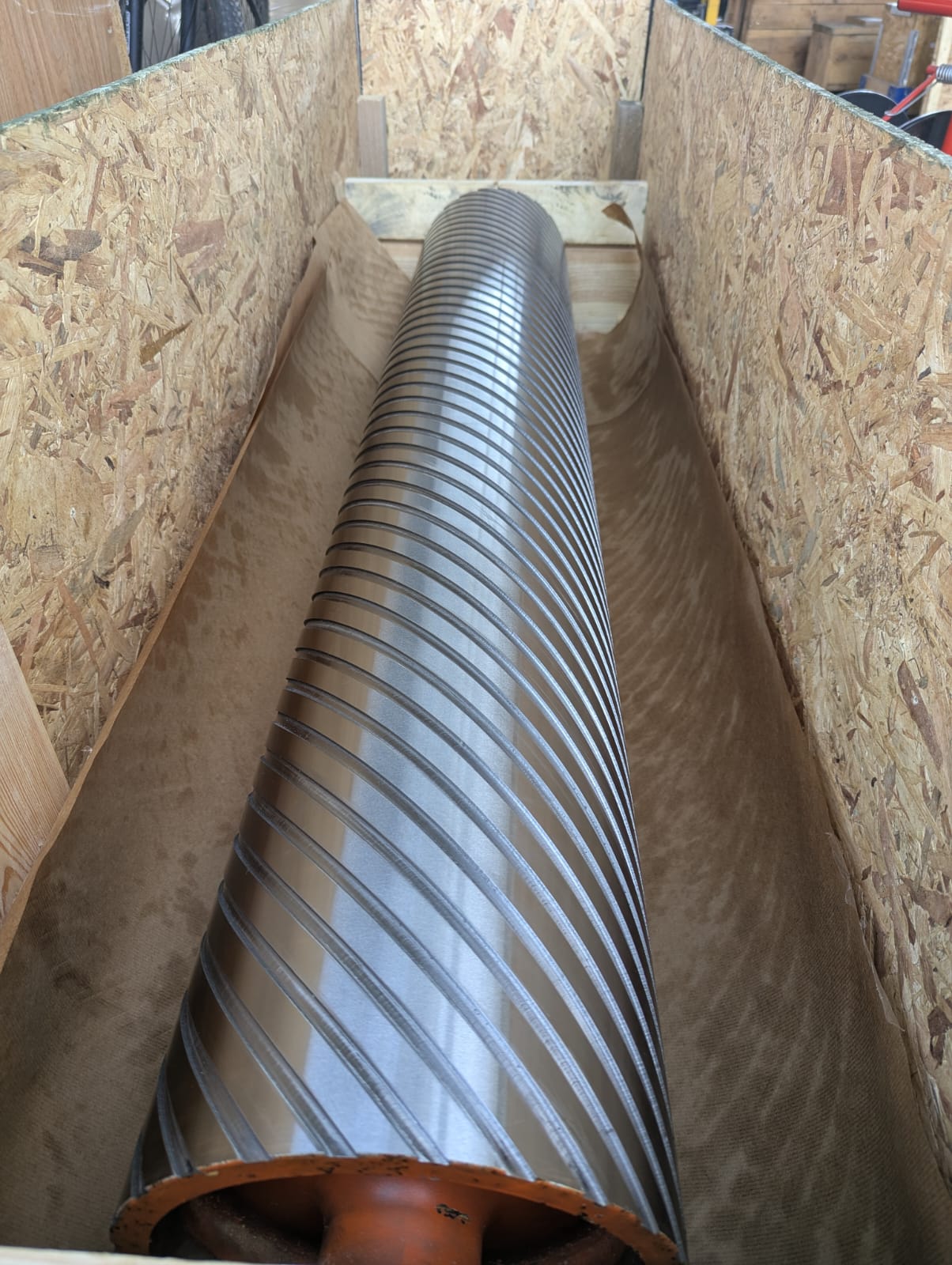
Reconditioned steel guide roller for abrasive belts with spiral grooves
01

Roller Assessment

The working surface, groove wear, journals and the feasibility of further machining of the roller body were assessed. This formed the basis for defining the refurbishment scope.

02

Turning the Working Surface

The worn surface was turned, reducing the working-section diameter from Ø250 to Ø245 mmThe resulting surface provided the base for re-machining the spiral grooves.

CNC Turning
03

Journal Refurbishment

The worn journal surfaces were restored by weld build-up followed by grinding.As a result, the refurbishment covered not only the working section of the roller but also its journals.

04

Restoration of the Spiral Grooves

Once the surface had been prepared, the spiral grooves were machined again. Their geometry was reproduced from data supplied by the customer,without applying generic parameters from other rollers.

05

Dynamic balancing

The roller was dynamically balanced after the spiral grooves had been restored.The check was therefore performed on the component in its final geometry after the main machining operations had been completed.

Refurbishment Result

Spiral Grooves Before and After Refurbishment

The worn grooving was restored after the roller working surface had first been prepared. The component condition before refurbishment and after completion of the work can be compared below.

Worn spiral grooves on the abrasive belt guide roller prior to reconditioning BEFORE

Worn Grooves and Worn Surface

Before refurbishment, the working surface was worn and the spiral grooves required restoration. Before the grooves could be re-machined, the roller surface first had to be prepared.

Restored spiral grooves on the abrasive belt guide roller after reconditioning AFTER

Restored Spiral-Groove Geometry

After the surface had been prepared, the spiral grooves were machined again to the geometry specified in the customer data. The roller was then dynamically balanced in its final geometry.

Result of the Work

What Was Restored During Refurbishment?

The scope covered more than the roller working surface. The journals were also refurbished, the spiral grooves restored and the finished component dynamically balanced after machining.

Restored Working Surface

The worn layer was removed by turning, creating an even base surface for re-machining the spiral grooves.

Restored Groove Geometry

The spiral grooves were re-machined in accordance with the customer data, restoring the surface intended to work with the abrasive belt.

Refurbished Journals

The worn journal surfaces were restored by weld build-up followed by grinding.

Final Dynamic Balancing

The roller was balanced after the spiral grooves had been machined, so the check was performed on the component in its final geometry.

Restoring the surface and grooves reinstated the conditions required for correct abrasive-belt guidance and reduced belt slippage.

Technical Explanation

Why Was the Roller Balanced Only After the Grooves Were Machined?

Turning the surface and machining the spiral grooves change the amount and distribution of material relative to the roller axis. For this reason, dynamic balancing in this project was carried out after machining and groove restoration were complete..

This meant the check was performed on the component in its final geometry — after the working diameter had been reduced, the journals refurbished and the new grooving completed.

Assessment of Refurbishment Feasibility

When Can an Existing Roller Be Refurbished?

A worn surface or worn grooves do not automatically mean that the roller must be manufactured from scratch. The possible refurbishment scope depends on the design and actual condition of the specific component.

Roller Body Design It is necessary to assess whether the roller design allows further machining without exceeding the limits imposed by its construction.
Wall Thickness The amount of material that can be removed depends, among other factors, on the remaining wall thickness and the geometry of the specific roller.
Condition of the Surface and Journals Before defining the work scope, not only the working surface but also the journals and other areas relevant to continued roller use must be checked.
Required Machining Scope The amount of material that must be removed and the feasibility of subsequently restoring the required working-surface geometry are both important.

In this project, the roller design allowed the working-section diameter to be reduced from Ø250 to Ø245 mm and the existing body to be reused. For another component, the permissible machining allowance may be completely different.

See precision rollers
Completion of the Project

Finished Roller Secured for Transport

The roller arrived without a transport crate. After refurbishment, we prepared new packaging, secured the finished component and arranged transport to the customer's plant in Poland.

After restoring the surface, journals and spiral grooves, proper preparation of the roller for onward logistics was also important. The refurbished component was placed in a crate before shipment to the customer.
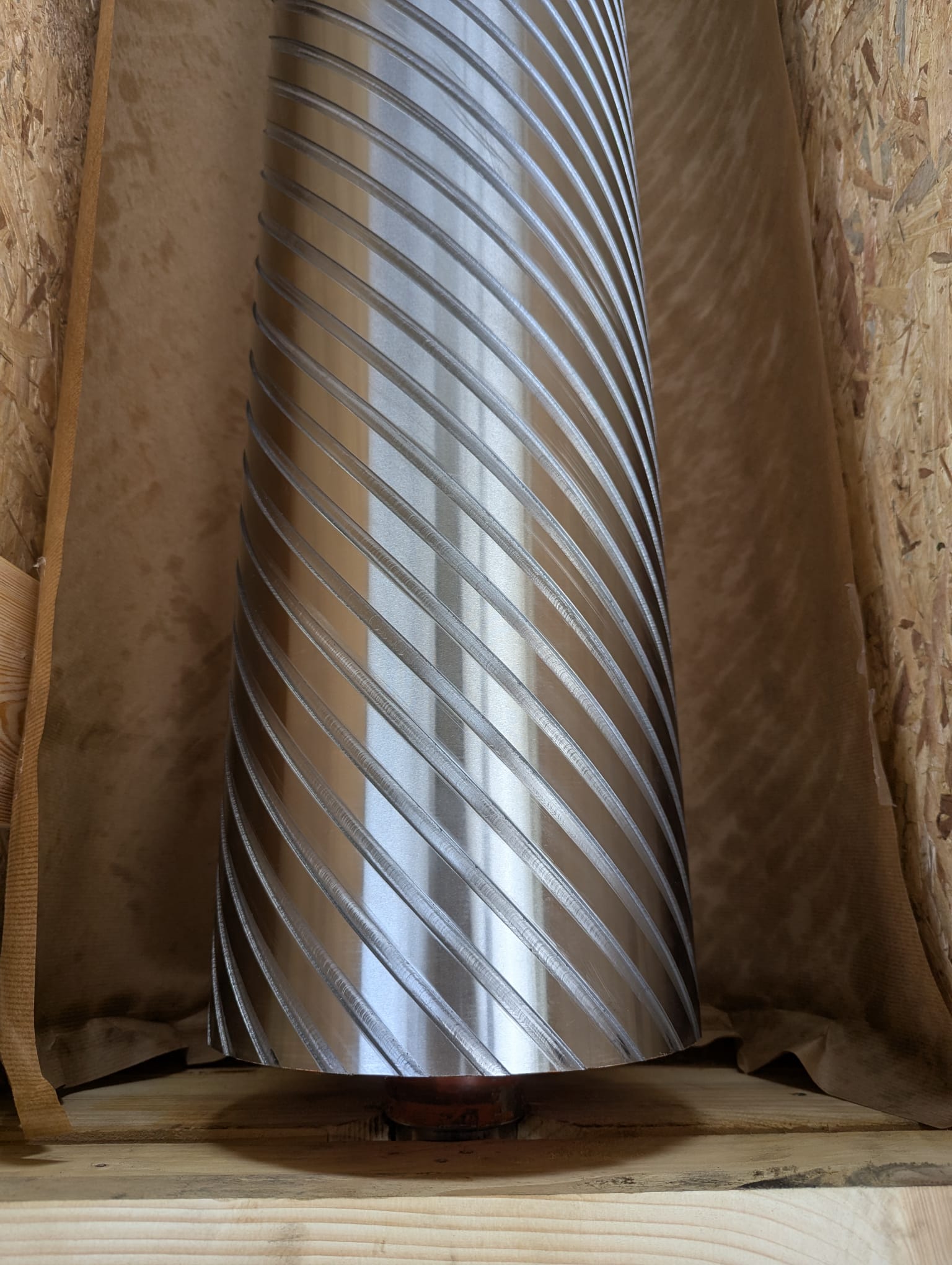
Refurbished grinding roller secured in a shipping crate
FAQ

Frequently Asked Questions About Grinding Roller Refurbishment

Whether refurbishment is possible depends on the design and condition of the specific roller. Below are the main points worth checking before machining begins.

Can Worn Spiral Grooves on a Roller Be Re-Machined?

Whether the grooves can be re-machined depends on the condition and design of the specific roller. In this project, the surface could be turned from Ø250 to Ø245 mm and the groove geometry then restored from customer-supplied data.

Can the Roller Diameter Be Reduced During Refurbishment?

This can only be done when the design and remaining wall thickness allow the required amount of material to be removed. The machining allowance should be determined individually for each component.

What Determines How Much Material Can Be Removed from the Roller Surface?

Relevant factors include the current geometry, wall thickness, body design, extent of wear and the parameters required after refurbishment. This is why the specific roller must be assessed before machining begins.

Why Must the Roller Be Balanced After New Grooves Are Machined?

Turning the surface and machining the grooves change the amount and distribution of material relative to the rotation axis. In this project, dynamic balancing was performed after the roller's final geometry had been restored.

Can Roller Refurbishment Also Include the Journals?

Yes. In this project, the worn journals were refurbished by weld build-up and grinding, so the repair covered both the working section and the journal surfaces.

What Data Are Needed to Assess Refurbishment Feasibility?

A technical drawing, basic dimensions, design information and photographs of the wear are helpful. The exact data required, however, depend on the roller type and the planned refurbishment.

Is a Technical Drawing Required for Refurbishment?

A drawing significantly simplifies assessment of the component and restoration of the required geometry. In this project, the customer data defined, among other things, the geometry required to re-machine the grooves.

Can Every Wide-Belt Sander Roller Be Refurbished?

No. Refurbishment feasibility depends, among other factors, on the condition of the body, wall thickness, wear of the surface and journals, and the machining required to restore the geometry. In this project, the design allowed the diameter to be reduced from Ø250 to Ø245 mm, but this is not a universal value for other rollers.

Precision Rollers · PROEXPORT

Do You Have a Worn Roller with a Damaged Surface, Grooving or Journals?

The possible refurbishment scope depends on the design and condition of the specific component. In many cases, the surface, journals and working geometry can be restored without manufacturing an entirely new roller.