









PROEXPORT – The Best From Europe
Industrial Gears • Custom Manufacturing

Custom gears manufactured from technical drawings or supplied samples

When a standard part is unavailable or a worn gear brings the machine to a standstill, PROEXPORT manufactures custom-made gears. We manufacture according to technical documentation or analyze the provided sample to determine whether its geometry can be reproduced.

Manufactured in accordance with the technical drawing and gearbox specifications.

Analysis of a worn sample when documentation is unavailable.

Selection of materials and processing methods based on the load and operating conditions.

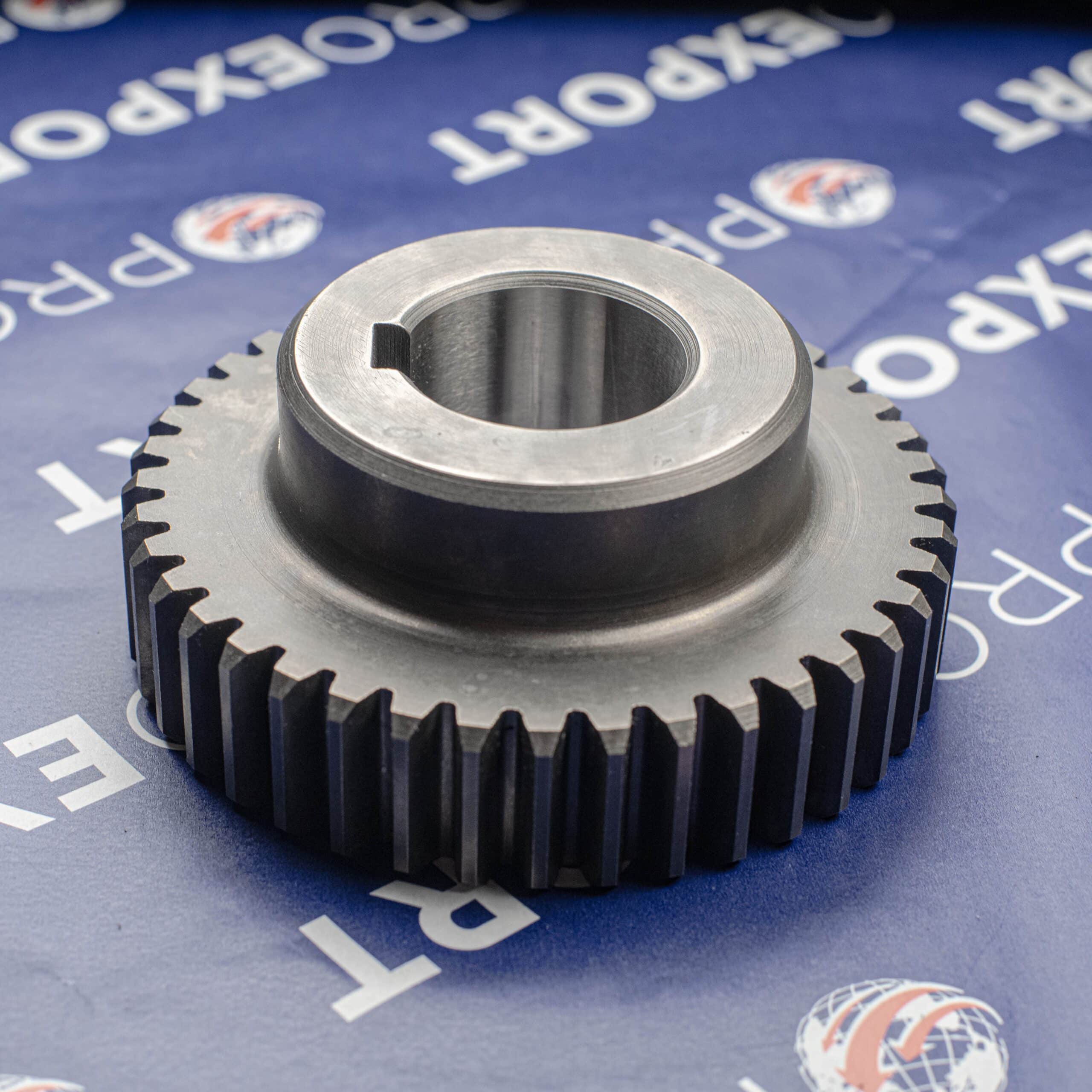
Custom-made industrial gear manufactured by PROEXPORT
Custom-made gear
Documentation Production According to the Drawing
Sample provided Analysis and Reconstruction of Geometry
Flexible Implementation Single pieces and small runs
Production Scope

What types of gears can we manufacture?

. . We manufacture custom gears from technical documentation or a supplied component. We select the gear type, material, heat treatment and finishing process to meet the requirements of the specific gear drive. We confirm the scope of work after analysing the drawing or sample.

Implementation Path

Production in accordance with the documentation

Manufactured based on a technical drawing, model, or agreed-upon specifications.

Implementation Path

Analysis of the Supplied Sample

Assessment of a worn or damaged component and the feasibility of restoring its geometry.

Straight teeth

Spur gears

Gears manufactured in accordance with the required geometry, module, number of teeth, and method of mounting in the mechanism.

Helical gearing

Helical gears

The gearing is manufactured to the specified module, helix direction and helix angle of the mating components.

Angular gearboxes

Bevel gears

Components for gearboxes that change the direction of power transmission, manufactured according to the geometry of the mating system.

Worm gear system

Worm gears

Gears designed to work with a worm, manufactured in accordance with the specifications and material specified for the gearbox.

Internal and External

Gear rings

Gear rings with internal or external teeth, manufactured to the documentation or the geometry of the supplied component.

Linear element

Gear racks

Toothed components manufactured to the required length, module, material, and method of installation in the machine.

Do you have a drawing or a worn gear?

Please submit the documentation, photos, and basic dimensions. If you don’t have a drawing, please describe the machine and the operating conditions of the part— we’ll check whether we can provide a replacement.

Submit the data for analysis
Technical characteristics

Gears: specifications and manufacturing scope

The gear parameters are selected based on the gear geometry, load, mounting method, and operating conditions. The table below shows scope of materials and processes, which may be included in the specifications for a specific order.

Technical Specifications of the Gear Specifications for manufacturing from documentation or producing a replacement from a supplied sample.
SPEC design
Gear type Spur gears, helical gears, bevel gears, worm wheels, gear rings and gear racks.
Module and Geometry According to the project documentation or based on measurements that can be taken on the provided sample.
Dimensions of the component Determined on a case-by-case basis after analyzing the diameter, width, hole, hub, and manufacturing capabilities.
Accuracy class Selected based on the application, gear geometry, and the requirements specified in the technical documentation.
Steel Materials Structural steels, alloy steels for heat treatment and carburizing, and stainless steels.
Other materials Cast iron, bronze, brass, and engineering plastics, including PA, POM, and PEEK—subject to an application evaluation.
Heat treatment Through hardening or induction hardening, quenching and tempering, carburising and nitriding, depending on the material.
Finishing work Gear tooth and bore grinding, as well as keyway machining, where required by the component documentation.
Technical note: We confirm the final manufacturing scope after reviewing the documentation or sample. Material availability, heat treatment and finishing options depend on the geometry and intended use of the specific gear.
Benefits for the Company

What are the benefits of ordering a custom-made gear?

Custom gear manufacturing is particularly useful when a standard part is unavailable or does not fit the existing mechanism. We determine the scope of work based on the documentation, the design, and the operating conditions.

Replacement of an unavailable part

The gear can be manufactured from documentation or based on an analysis of the supplied sample. This can make machine repair possible even when a standard replacement is no longer available from the original manufacturer.

Ability to replace a single component

If the remaining parts of the mechanism are still serviceable, manufacturing only the replacement gear may reduce the scope of the repair without replacing the entire assembly.

The Ordered Geometry of the Substitute

An analysis of the dimensions, teeth, hub, and mounting method provides a solid foundation for the production of the component and any subsequent projects.

Material selected for operating conditions

You can re-evaluate the load, the working environment, the material, and the required heat treatment, rather than automatically copying the previous variant.

Single pieces and small runs

The scope may include a single part needed for repair, a prototype part, or a small production run for a custom device.

Check if a replacement can be made

Send us a drawing or photographs of the worn gear, its basic dimensions and a description of the machine. We will assess the available manufacturing options.

Get a quote for a replacement
Industries and Applications

Where are custom-made gears used?

Gears manufactured from documentation or a supplied sample are primarily used where a standard replacement is unavailable. Geometry, Materials, and Technology In that case, it must be adapted to the specific mechanism and its operating conditions.

Common ground

The gear is part of the complete drive system

The selection process begins with the component's function in the machine, not solely with its dimensions.

The same geometry does not always mean the same material. Load conditions, lubrication, the operating environment, and interacting components are important.

Service and Replacement Parts

Maintenance

Reproduction of unavailable parts for existing machines, analysis of worn components, and preparation of replacement parts needed to restore the mechanism to working order.

Documentation or supplied sample
Production Machinery

Heavy Industry and Machinery

Gears for production machinery, machine tools, presses, and custom industrial mechanisms.

Agricultural Machinery

Agriculture

Components for transmissions, attachments, and mechanisms used in tractors and agricultural machinery.

New Designs

Machine Prototyping and Construction

Individual components and small production runs for testing, prototypes, and custom devices.

A Challenging Environment

The Food and Pharmaceutical Industries

Variants made of stainless steel or engineering plastics, selected based on an analysis of the component’s operating conditions.

Don't see your industry on the list?

Describe the machine, the function of the gear, the operating conditions and the available technical data. We will assess whether the component can be manufactured.

Describe the application
Interactive 3D Model

Explore the structure of a gear from every angle

Rotate the model, zoom in on it, and select one of the active points. The model will automatically adjust to the best view and will highlight the selected design detail.

Active model Drag the model or use the points
The 3D model requires a browser that supports WebGL. Please update your browser or open the page on another device.
The starting point for production

Technical documentation or a supplied gear?

We can begin production based on a complete drawing or on a physical component that has been in use in the machine. First, we analyze the available data, and then we determine the scope of the measurements, the material, and the possible manufacturing process.

Design Variant

Production in accordance with the documentation

A technical drawing or model makes it possible to determine the gear geometry and the material and machining requirements directly.

module, number of teeth, angle, and other dimensions,

material, heat treatment, and required finish,

bore, hub, keyway and mounting method.

Design Variant

Reverse engineering from a supplied sample

When documentation is not available, a good starting point may be a worn or damaged gear submitted for analysis.

measurements of readable geometric features,

assessment of wear, damage, and surface condition,

Verification of mating parts, if necessary.

A gear analyzed as a template for manufacturing a replacement part
Geometry Material Assembly
Analysis of the supplied sample before preparing the documentation

What if the item delivered is severely damaged?

The degree of wear may limit the number of parameters that can be determined. In such cases, photographs of the mechanism, data for the mating gear and information about the machine and operating conditions can be helpful.

Request a preliminary analysis
From Inquiry to Finished Part

What is the process for manufacturing a custom gear?

The next steps depend on whether the starting point is complete documentation or a supplied sample. We begin every project with an analysis of the available data and to determine the possible scope of work.

01

Analysis of the Inquiry and Preliminary Assessment

We review the drawing, model or supplied sample. We determine the component application, the available data, the condition of the gear and the information required to define the manufacturing scope.

02

Reconstruction or verification of geometry

We verify the module, number of teeth, dimensions, bore, hub, and mounting method. If no documentation is available, we analyze the parameters that can be determined from the supplied component.

03

Selection of Materials and Technologies

We take into account the load, operating speed, environment, interfacing components, and requirements for heat treatment and surface finishing.

04

Manufacturing of the component

We prepare the material and carry out the required machining operations in accordance with the agreed documentation. The scope includes the gear geometry, gear teeth, bore, hub and the mounting features specified in the design.

05

Heat Treatment and Finishing

If required by the specifications, the gear undergoes the appropriate heat treatment. Next, the agreed-upon finishing operations are performed, such as grinding the teeth or the bore.

06

Quality control of the finished gear

Every manufactured part undergoes a dimensional inspection. We verify that the relevant parameters comply with the documentation and the specifications established for the order in question.

Start by submitting the available data

Send a drawing, model, photographs or the basic dimensions of the gear. For a worn component, describe its condition and function in the machine.

Submit the data for analysis
Questions and Answers

Frequently Asked Questions About Gears

We answer questions about custom gear manufacturing, geometry reconstruction, materials, documentation and preparing a request for quotation.

01 What does gear manufacturing involve?

Custom gear manufacturing involves producing a new component from technical documentation or reconstructing its geometry from a supplied sample. The scope includes parameter analysis, material selection, manufacturing and inspection of the finished component.

02 When is it a good idea to have a custom gear made?

Custom manufacturing is worth considering when the original part is unavailable, a catalog part does not fit, or the repair of an older machine requires maintaining the existing geometry. The possible solution depends on the condition of the entire mechanism.

03 Can a gear be reverse-engineered from a damaged sample?

A damaged or worn sample can serve as the starting point for analysis. We first determine which parameters can be reliably measured. More extensive damage may require data for the mating gear, photographs of the mechanism or additional dimensions.

04 What information is required for a quotation?

It is best to send a drawing, model, or photos of the wheel along with the basic dimensions. Information about the machine, the component’s function, operating conditions, material, and mating parts is also helpful.

05 What types of gears can be manufactured?

The scope may include spur gears, helical gears, bevel gears, worm wheels, gear rings and gear racks. We confirm manufacturing feasibility after analysing the geometry and project requirements.

06 What is a gear module?

The module determines the size of the gear teeth and is one of the fundamental gearing parameters. Mating gears must have compatible meshing parameters, so the module is considered together with the number of teeth, pressure angle and the remaining geometry.

07 What are bevel gears used for?

Bevel gears are used in gearboxes where power is transmitted between intersecting axes. A common solution is to change the direction of power transmission by 90 degrees.

08 What materials are gears made of?

The material is selected based on the load and operating environment. Possible options include structural and alloy steels, stainless steels, cast irons, bronzes, brass, and engineering plastics such as PA, POM, and PEEK.

09 Can a gear undergo heat treatment and grinding?

Where required by the specification, the gear may undergo appropriately selected heat treatment and finishing operations. The scope is determined on the basis of the material, geometry and operating conditions.

10 Do you manufacture individual gears?

Yes, the scope of production can include a single item needed for repair, a prototype part, or a small production run. Each inquiry is evaluated in terms of geometry, material, and manufacturing capabilities.

11 Do you offer international shipping?

Yes, delivery can be arranged within Poland and internationally. We determine the method of packaging, transportation, and delivery of the item on a case-by-case basis for each order.

Interactive Project Card

Create an illustrative specification for a gear

Change the geometry, assembly method, and material option. The model and dimensions update in real time, creating Preliminary Data Sheet for a Technical Discussion.

Active parametric model The values change without reloading the page
Stable technical view
Realistic technical model Straight teeth
Pitch diameter d96 mm
Outside diameter da102 mm
Root diameter df ≈88.5 mm
Width b35 mm

Preliminary Specifications

Updated in real time
Gear typeCylindrical gear, straight teeth
Geometry3.0 m · 32 z · 35 b mm
BoreØ30 mm, with a keyway
HubStandard hub
MaterialC45 Steel
Heat treatmentTo be determined following analysis
To be confirmed: accuracy class, tolerances, load, and operating conditions of the gearbox.

Copy the tab or paste the selected settings directly into the quote form below.

Move to the form
The model and calculations are for illustrative purposes only and are based on a standard design. The final geometry, material, tolerances, and manufacturing process are determined by an analysis of the documentation and operating conditions.
Interactive Technical Brief

Prepare the information for a gear quotation

In just a few steps, you can organize the information to make it easier to analyze the query. At the end, you'll receive a ready-made summary to copy and send along with photos or documentation.

Step 1 of 5

Where do we start our analysis?

Select all the materials you currently have available. You can select multiple options—for example, a drawing, a 3D model, photos, and a used wheel at the same time.

Step 2 of 5

What type of gear is required?

Select the option that most closely matches the part you need. You can describe any non-standard geometry in the next step.

Step 3 of 5

What is the scope of the planned project?

Specify the main purpose of your inquiry. Select the quantity separately so that the brief is clear.

Step 4 of 5

Which technical specifications are already available?

Check off everything you can share. You don't need to know every parameter—this list will show you where to start the conversation.

Step 5 of 5

Enter the quantity and a brief description of the application

The final step clarifies the scale of the order and the information that cannot be conveyed by the drawing alone.

Select at least one material—you can choose several
PROEXPORT – The Best From Europe