










Uneven surface temperature
When the work surface is not thermally stable, the problem may affect material feed, heat removal, or process repeatability.
At PROEXPORT, we manufacture chrome-plated industrial heating and cooling rollers for production lines where the working surface is used to heat, cool, or stabilize the material during the process.
manufacture of new rollers from technical documentation or after analyzing a reference roller,
reconditioning of the working surface, journals and mechanical components within the agreed scope,
diameters up to 600 mm, lengths up to 6,000 mm, and weights up to 2,500 kg.
Please submit a drawing, photos, dimensions, or a description of how the roller works in the machine.
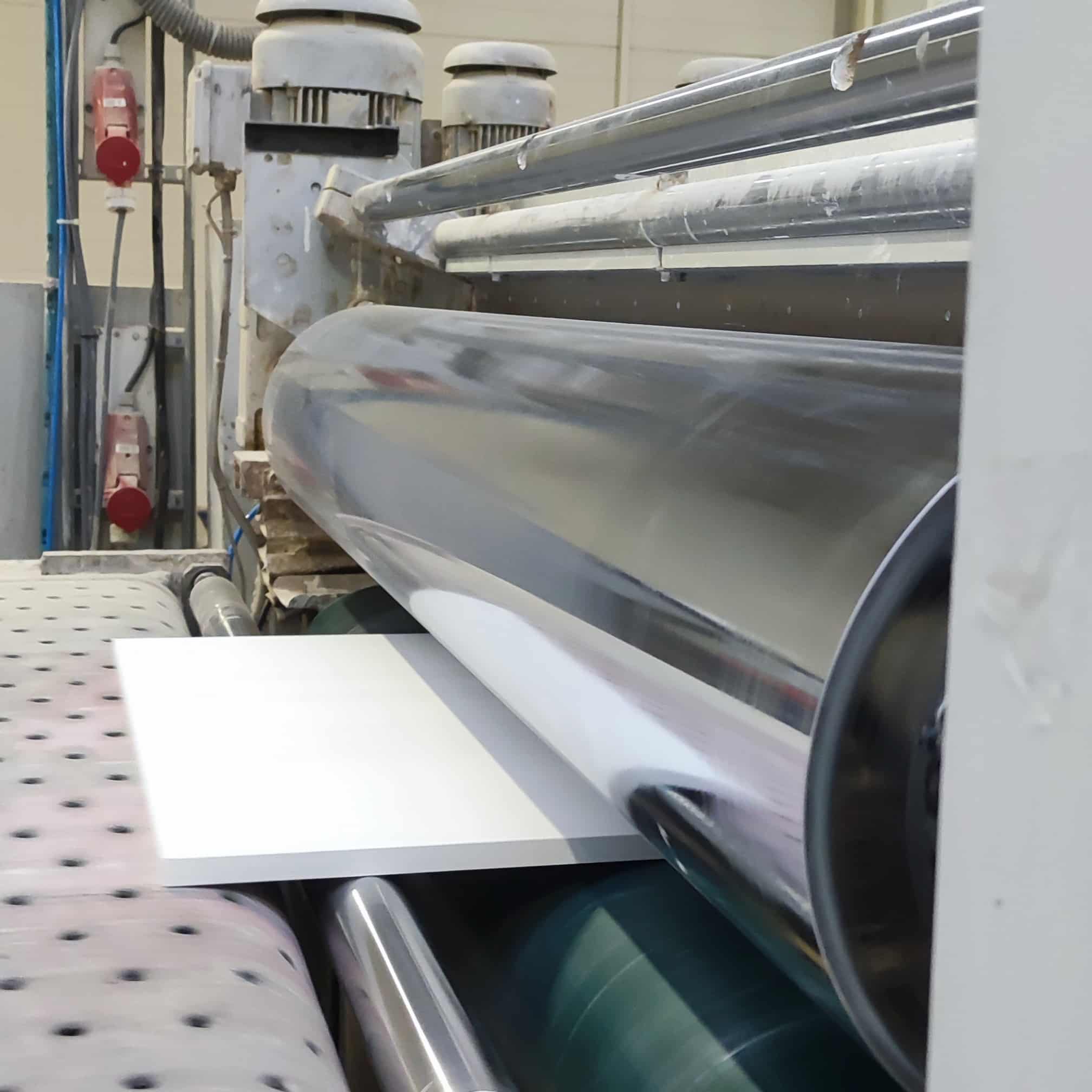
At PROEXPORT, you can order new chrome-plated heating and cooling rollers, the reconditioning of existing cylinders, and the reproduction of a part based on an old specimen. Before providing a quote, we analyze the cylinder’s function within the machine, the working medium, the surface condition, the body, the journals, and the process requirements.
We manufacture new heating and cooling rollers in accordance with the customer's technical documentation or based on an analysis of the provided sample.
We recondition worn rollers if the condition of the body and the wall thickness allow the part to continue operating in the machine.
The roller’s working surface can be hard chrome plated to a hardness of 850–1,200 HV, with the coating thickness selected for the application.
Once the coating has been applied, we can perform finishing operations on the surface, including grinding and polishing to the agreed-upon surface roughness.
During reconditioning, we inspect not only the chrome plating, but also the roller body, journals, bearing seats, geometry and components affecting assembly.
If the documentation is unavailable, we can assess whether the roller can be reconstructed from the existing roller, photographs and measurements.
Send us a drawing, photos, dimensions or a description of the roller’s operation — we will assess the feasible scope of work.
We manufacture chrome-plated heating and cooling rollers in accordance with the technical documentation, the component’s function within the machine, and the requirements of the specific application. The values below show the verified production range for this group of rollers.
| Part Type | chrome-plated heating/cooling roller or cylinder |
|---|---|
| Function in the process | heating, cooling or temperature stabilization of the material or working surface |
| Working-Surface Coating | hard chrome |
| Hard Chrome Coating Thickness | 10–200 µm; greater coating thicknesses are quoted individually |
| Hardness of the coating | 850–1200 HV |
| Roughness after polishing | Ra 0.08–0.16 µm |
| Operating temperature of the coating | Full properties up to approx. 200°C; usable up to approx. 400°C with decreasing hardness |
| Working media | water, glycol, oils — selection depends on the documentation and application |
| Internal Configurations | heating or cooling chambers, internal channels and process bores — according to the documentation or after analyzing a reference roller |
| Implementation Path | a new cylinder, reconditioning of an existing cylinder, or recreating the geometry from an old one |
We confirm the final manufacturing parameters, reconditioning scope, heat-transfer medium and internal configuration after reviewing the technical drawing, roller condition or supplied reference roller.
An inquiry about a heating or cooling roller usually doesn't start with the price alone. Most often, the customer notices a specific issue in the process: a problem with temperature, the working surface, material adhesion, or the mechanical condition of the cylinder.
When the work surface is not thermally stable, the problem may affect material feed, heat removal, or process repeatability.
With cooling rollers, it is not only the surface area that matters, but also the internal structure, the working medium, and the technical condition of the entire component.
Sticking issues may be caused by the condition of the coating, surface roughness, wear on the working surface, or the operating conditions of the line.
A damaged chrome-plated surface needs to be assessed, because the coating itself does not provide unconditional protection if corrosive agents reach the substrate.
During reconditioning, we assess whether the working surface and specified dimensions can be restored while taking the roller body condition and geometry into account.
If the problem extends beyond the coating, the reconditioning assessment may also cover the journals, bearing seats and mechanical components.
Damage can occur, for example, when a foreign object gets caught between the rollers. In such cases, it is necessary to evaluate not only the surface but also the geometry of the workpiece.
If the roller continues to cause problems after repair, we analyze the surface condition, geometry, journals and operating conditions—not only the chrome plating.
Chrome-plated heating and cooling rolls are used in production lines where the material passes through a heating zone, a cooling zone, a temperature stabilization zone, or a zone of contact with the roll’s working surface. The design specifications are selected based on the process, the working medium, temperature, and technical documentation.
Heating and cooling rollers can be used in production lines where material feeding, heat removal, and a stable working surface are important.
In textile applications, the condition of the working surface, the geometry of the roller, and the adaptation of the roller’s operation to the material and process are important.
In papermaking processes, a roll must be evaluated not only based on its coating, but also on its journals, body, geometry, and operating conditions within the machine.
For inquiries from the heavy industry sector, it is important to assess the condition of the part, any mechanical damage, the working surface, and its suitability for further use.
In extrusion processes, temperature, cooling, the working surface, and the selection of a solution tailored to a specific line are important.
Send us a description of the process, photos of the roller, or a technical drawing—we’ll assess whether we can produce a new part, refurbish it, or recreate it from a sample.
A worn working surface, incorrect surface roughness, temperature problems or damaged journals may affect the roller’s operating stability. Therefore, before determining the scope of work, we assess not only the chrome plating, but also the roller body, geometry, internal configuration and operating conditions.
A properly prepared roller may help achieve more stable heating or cooling performance, provided that the operating conditions comply with the documentation and machine design.
If the problem is caused by the condition of the coating, roughness, or wear on the working surface, reconditioning or applying a new coating may reduce material adhesion to the roller.
Hard chrome plating and machining may allow the roller’s working surface and dimensions to be restored within the scope established after reviewing the documentation or existing component.
During reconditioning, we also inspect the roller body, journals, bearing seats, geometry and mechanical components, as these parts may affect the roller’s operation after installation.
The heat-transfer medium, temperature and internal configuration must be based on the technical documentation or analysis of a reference roller. We therefore organize the technical data required for assessment before preparing a quotation.
If the condition of the roller body and the wall thickness allow continued operation, reconditioning may be the appropriate solution. If documentation is unavailable, we can assess whether the geometry can be reconstructed from the existing roller.
Please send a drawing, photos, dimensions, or a description of how the roller works in the machine.
Not every inquiry requires a new component. Depending on the condition of the roller body, documentation, wall thickness and the roller’s function in the machine, we select the appropriate solution: manufacturing a new roller, reconditioning the existing cylinder or reconstructing its geometry from the existing roller.
We manufacture new heating or cooling rollers based on the customer’s technical drawing. The documentation should specify the dimensions, installation method, work surface requirements, and details regarding the internal layout.
Reconditioning is possible if the condition of the cylinder body and the wall thickness allow for continued operation of the component. In such cases, we evaluate not only the coating, but also the journals, bearing seats, geometry, and mechanical condition of the cylinder.
If the customer does not have the documentation, we can assess the possibility of reconstructing the geometry based on an old unit, photographs, and measurements. This is a good solution for older machines or parts that have been modified in the past.
We confirm the final implementation plan after analyzing the drawings, photos, measurements, the condition of the roller, and the operating conditions within the machine.
Please submit a drawing, photos, dimensions, or a description of the roller's operation.
For heating and cooling rollers, the coating price alone is not enough to make an informed decision. The roller function, body condition, journals, working surface, heat-transfer medium, temperature and feasible scope of work must be assessed first.
We assess whether the appropriate solution is a new roller, reconditioning of the existing roller or recreation of its geometry from a reference roller.
We don't limit our analysis to the chrome. We also inspect the body, journals, bearing seats, geometry, and mechanical components.
If the condition of the component allows for reconditioning, the scope may include not only the working surface, but also the mechanical work necessary for the roller to continue operating.
When documentation is not available, we can assess the feasibility of reconstructing the cylinder based on an old specimen, photographs, and measurements.
Before making an offer, we gather information about the medium, temperature, dimensions, roller function, working surface, and application requirements.
Every roller that is manufactured or reconditioned undergoes a quality control inspection before shipment. Upon request, we can provide a report detailing the agreed-upon measurements, such as surface roughness Ra and coating thickness.
This may still be sufficient for a preliminary assessment. Please submit the available data, and we will explore possible ways to move forward.
When manufacturing, reconditioning, or rebuilding a heating or cooling roller, it is usually necessary to determine the part’s function within the machine, the working medium, the temperature, the surface condition, the journals, the geometry, and the technical documentation.