PROEXPORT – The Best From Europe
Paper-rewinding rollers

Paper Rewinder Rolls – Manufacturing and Refurbishment

At PROEXPORT, we manufacture new paper rewinder rolls and refurbish worn work rolls for rewinders, slitter rewinders and paper converting lines. Before selecting a coating, we check whether the problem stems from the surface, geometry, runout, journals, bearing seats or operating conditions.

manufacturing new rolls from technical documentation or a physical sample,

refurbishment of the working surface, journals and mechanical components,

coating selection: hard chrome plating or a ceramic coating for more severe abrasive wear.

Request a quote

Please submit a drawing, photos, basic dimensions, or a description of the roller's operation.
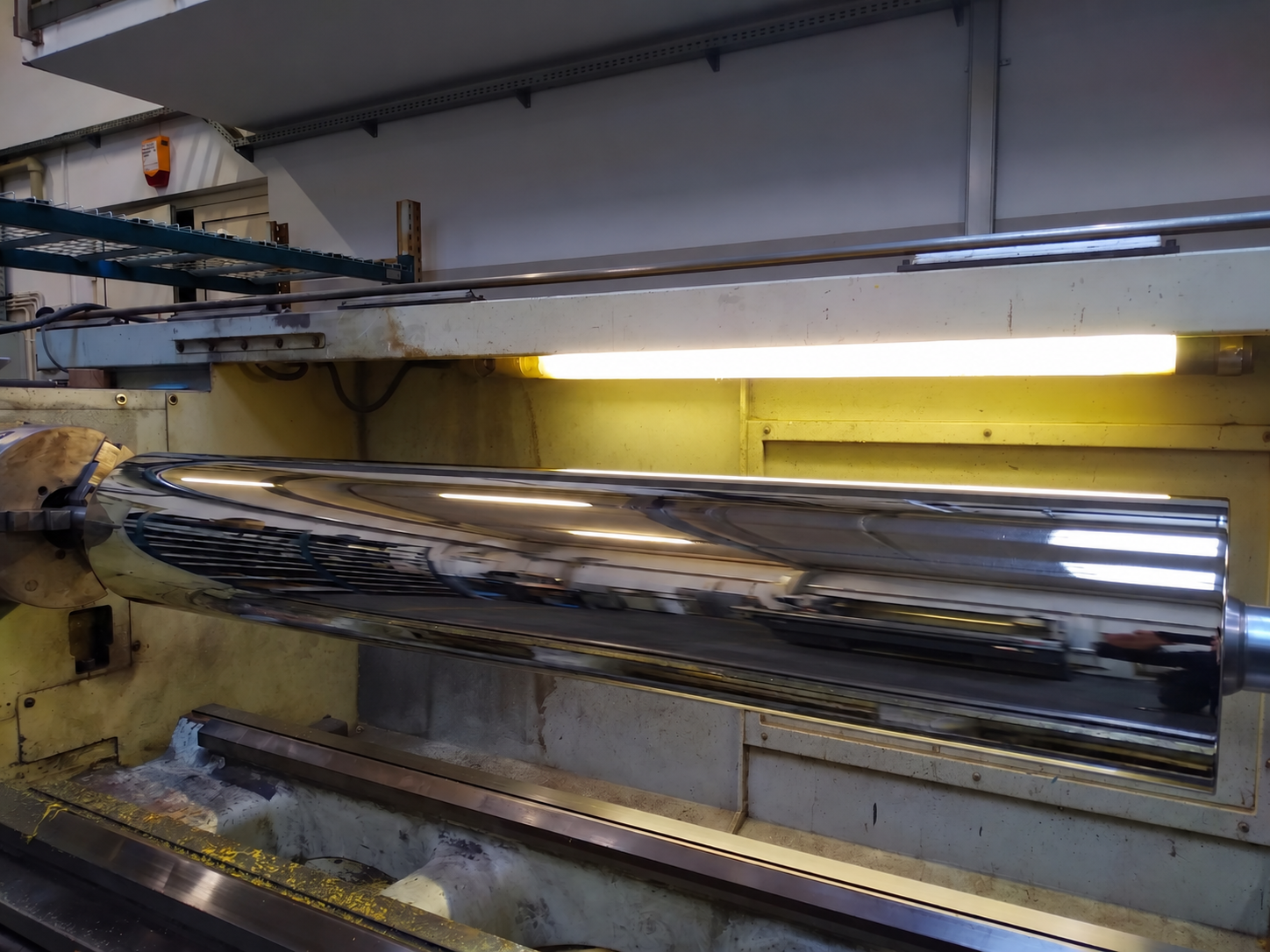
Paper-rewinding rollers used with large paper rolls
hard chrome working layer
ceramic coating for more severe abrasive wear
refurbishment of the coating and metal components
Scope of Work

What can you order from PROEXPORT?

At PROEXPORT, you can order both new paper-rewinding rollers and have worn-out work rollers reconditioned. We tailor the scope of work to the documentation, the condition of the surface, the journals, the geometry, and the operating conditions of the roller on the production line.

Manufacture of New Dryer Rolls

We manufacture new paper-rewinding rollers in accordance with the customer's technical documentation or based on a provided sample.

Reconditioning of Working Rollers

We refurbish worn rollers, with our work covering the working surface, pins, bearing seats, and components requiring repair.

Hard Chrome Plating

We apply hard chrome plating to the working surface and carry out the subsequent finishing operations when required by the application and the condition of the roll.

Grinding and Polishing

After applying the coating or repairing the working surface, we can perform grinding, polishing and, if required, honing.

Journal and Bearing-Seat Repair

As part of refurbishment, we can inspect, repair or rework the journals and bearing seats.

Dynamic balancing

Once the agreed-upon work is complete, the roller can undergo quality control and dynamic balancing before being prepared for installation.

Discuss the scope of work

For the evaluation, please prepare a drawing, photos, basic dimensions, or a description of how the roller works in the machine.

Technical Specifications

Technical Specifications of Paper Rewinding Rollers

We manufacture or recondition paper rewinding rollers based on documentation, a sample, or an assessment of the worn component. We select the specifications based on the roller’s function in a rewinder, winder, or packaging line.

drawing / pattern the basis for manufacturing a new roller
coating + metal scope of refurbishment of the working roll
inspection the scope specified for the order
Product Type paper-rewinding rollers
Application rewinders, bobbin winders, paper converting lines, paper mills and paper-bag production lines
The function of a roller working with a paper web, guiding the material, and ensuring stable operation on the rewinding line
Manufacturing a New Roller based on a technical drawing or a physical sample provided by the customer
Refurbishment after inspecting the working surface, journal surfaces, geometry, runout, and bearing seats
Working-Surface Coating technical chrome as the standard finish, or a ceramic coating for higher abrasion resistance
Finishing grinding, polishing, and, in certain cases, honing
Metal part Possible inspection and work on journal shafts, bearing seats, geometry, and balancing
Data for regeneration photos of the roller, photos of the damage, basic dimensions, current coating, description of the problem, and operating conditions
Data for the new roller a technical drawing or physical model, along with information about the roller's function in the line
Quality Control the scope specified for the job, e.g., measuring surface roughness or coating thickness
Custom Designs for individual evaluation based on documentation, photographs, a sample, or a description of the roller's operation

We confirm the final scope of work, type of coating, finishing, and quality control after analyzing the technical drawing, the condition of the roller, or the provided sample.

Applications

Where Are Paper Rewinder Rolls Used?

Paper rewinding rollers are used wherever material is fed, rewound, or packaged from a roll. In every application, the condition of the working surface, the geometry, the runout, and the mechanical components of the roller are important.
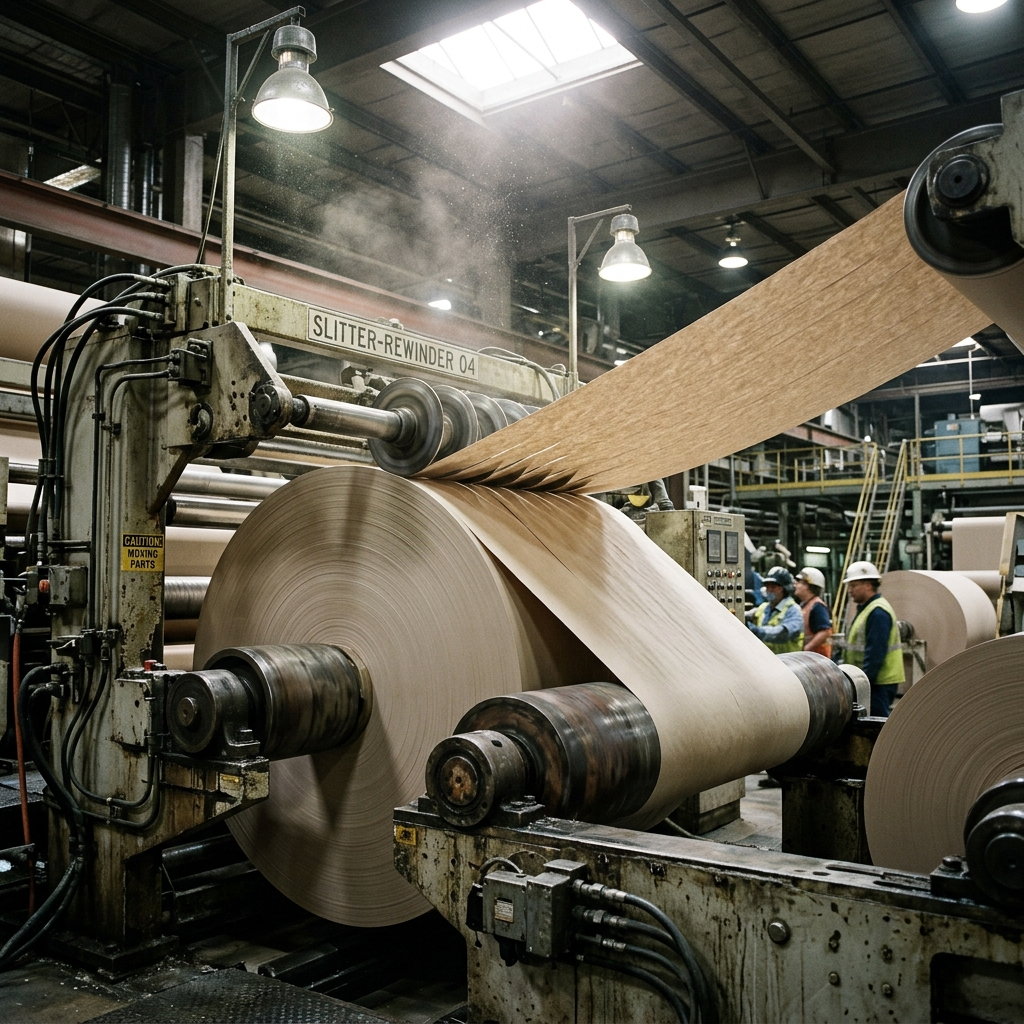
Work rollers in the paper rewinding line

Paper mills

In paper mills, rollers operate under conditions where stable web guidance, surface wear resistance, and the mechanical condition of the component are critical.

Rewinders and Slitter Rewinders

In rewinders and bobbin winders, the roll works directly with the material. The working surface, geometry and bearing arrangement affect how the paper web is guided.

Paper Converting from Rolls

When rewinding from larger reels to smaller ones, common indicators for evaluating the roller include slippage, surface wear, runout, or bearing problems.

Production of paper bags

In the production of paper bags, the stable operation of the guide or working rollers is important when wear, runout, or a mechanical problem hinders the feeding of the material.


Impact on line operations

What are the benefits of a properly selected paper-rewinding roller?

The paper rewinding roller affects web guidance, the stability of the rewinder’s operation, and the number of adjustments made by the operator. It is not only the coating that matters, but also the geometry, runout, journals, and the condition of the bearing seats.

More stable web guidance

Proper roller geometry and a properly prepared working surface help reduce paper feed problems during rewinding.

Lower risk of slipping

A worn, dirty, or improperly selected surface can increase the risk of the web slipping. Therefore, it is worth checking whether the cause lies with the roller or with the line settings.

Fewer corrections while working

When the roller has stable geometry and a properly prepared surface, the operator does not need to compensate for problems resulting from wear on the component.

A Better Assessment of the Cause of the Problem

Wobble, worn bearing seats, or damaged journal shafts can affect the operation of the line even if the working surface itself has been refurbished.

Paper slippage, uneven winding, or vibrations are not always caused by the coating itself. The cause may also be runout, geometry, bearings, pressure, tension, or line settings.

Technical Refurbishment

Reconditioning of Paper Rewinding Rollers

The reconditioning of a paper-rewinding roller involves more than just restoring the working surface. At PROEXPORT, we analyze the entire component: the coating, the journals, bearing seats, geometry, runout, and the scope of machining required to prepare the roller for further operation.

Roller Condition Assessment

We inspect the working surface, visible damage, journal shafts, bearing seats, geometry, runout, and information about the current coating.

Journal Repair

Depending on the degree of wear, we can inspect, repair, or prepare the journal shafts and the areas where they interface with the bearings.

Bearing Inspection

We evaluate the bearing seats and components that affect roller installation, operational stability, vibrations, and the risk of the problem recurring after reconditioning.

Renewal of the working surface

If the condition of the roll allows refurbishment, the surface can be prepared and the working-surface coating restored in accordance with the agreed scope of work.

Grinding and Polishing

After restoring the surface, we perform finishing operations, including grinding, polishing, and—if necessary—honing.

Dynamic balancing

Once the agreed-upon work is complete, the roller can undergo quality control and dynamic balancing before being prepared for installation.

Contact PROEXPORT

Send us photos, a technical drawing or a description of the problem, and we will assess the feasible scope of refurbishment.

Technical Decision

When Should a Dryer Roll Be Refurbished, and When Is a New Roll the Better Option?

When a paper-rewinding roller is worn out, the most important thing is to determine whether the component is suitable for reconditioning or whether it would be better to manufacture a new roller. At PROEXPORT, we first analyze the technical condition and only then recommend the scope of work.

When is refurbishment the right option?

  • the working surface is worn, but the roller is still suitable for further use,
  • the pins and bearing seats can be brought to the agreed-upon condition,
  • the geometry and runout can be corrected as part of the refurbishment work,
  • The scope of work may include both the coating and the metal part,
  • Reconditioning is technically justifiable compared to manufacturing a new part.
Request a Refurbishment Assessment

When is a new roller the better option?

  • The old roller has too much mechanical damage,
  • The component does not maintain the geometry required for operation in line,
  • the condition of the roller body or journals does not justify further refurbishment,
  • there is insufficient data or machining allowance to restore the component safely,
  • The customer wants to have a new roller manufactured based on a technical drawing or a physical model.
Request a Quote for a New Dryer Roll

In the absence of a technical drawing, we can assess the feasibility of the application based on a physical model. The final decision depends on the condition of the roller, its geometry, surface wear, the roller pins, and the bearing seats.

Order Process

How Do We Handle Your Order?

The production or refurbishment of a paper-rewinding roller begins with an analysis of the available data: drawings, photos, dimensions, a description of the problem, or a physical sample. Based on this, we determine the possible scope of work and the approach to be taken.

01

Inquiry Review

Please send a technical drawing, photos of the roller, basic dimensions, a description of the problem, or information about how the roller operates in the machine.

02

Assessment of the Roller’s Function and Condition

We check whether the problem might be caused by the working surface, geometry, runout, journal pins, bearing seats, or operating conditions.

03

Selecting the Technical Approach

We determine whether the appropriate approach is refurbishment, manufacturing a new roll, hard chrome plating, a ceramic coating or additional mechanical work.

04

Estimation of the Scope of Work

We prepare a quote based on the agreed-upon scope of work: manufacturing, remanufacturing, coating restoration, machining, or work on metal parts.

05

Manufacturing or refurbishment

We perform the agreed-upon work: surface preparation, chrome plating, machining, mechanical repairs, polishing, honing, or balancing.

06

Inspection and Preparation for Shipping

Once the work is complete, the roller undergoes an agreed-upon quality inspection, and is then prepared for transport and installation at the customer's site.

Submit a technical inquiry

For an initial assessment, a drawing, photos, basic dimensions, or a description of the roller's operation are sufficient.

Collaboration with PROEXPORT

What are the benefits of working with PROEXPORT?

For paper rewinder rolls, the coating is only one part of the assessment. Before preparing a quotation, we analyse the roll’s function, working-surface condition, geometry, runout, journals and bearing seats. This allows the scope of work to be based on the actual problem rather than an arbitrary choice of solution.

Diagnosis Before Pricing

First, we check whether the problem might be caused by the coating, runout, geometry, pins, bearings, or operating conditions on the production line.

Coating and metal part

Reconditioning may involve not only the working surface, but also work on the journal bearings, bearing seats, geometry, and balancing.

Choosing between chrome and ceramic

We treat technical chrome as the standard material for many work rolls. We consider ceramics when operating conditions call for higher wear resistance.

Quality Control Data

After the agreed-upon work has been completed, the scope of inspection may include, among other things, measurement of surface roughness, coating thickness, or dynamic balancing.

Is your roller worn out, or are you having trouble feeding the paper?

Please submit photos, a technical drawing, basic dimensions, or a description of the roller’s operation. Based on this information, we will assess whether the best course of action is reconditioning, a new roller, technical chrome plating, ceramic coating, or work on the metal component.

Contact PROEXPORT
FAQ

Frequently Asked Questions About Paper Rewinder Rolls

When manufacturing or refurbishing paper-rewinding rolls, it is usually necessary to determine the roll’s function in the line, surface condition, type of coating, runout, geometry, journals, and bearing seats.

What are paper-winding rollers?
Paper rewinding rollers are working components used in rewinding machines, reelers, and paper packaging lines. They work with the paper web, guide the material, and ensure the stable operation of the rewinding line.
Does PROEXPORT manufacture new rollers for rewinding machines?
Yes. We manufacture new paper-rewinding rollers based on a technical drawing or a physical prototype. For an initial assessment, we also need information about the roller’s function in the production line.
Can a worn-out paper-rewinding roller be reconditioned?
In many cases, yes, but the decision depends on the condition of the working surface, the journals, the bearing seats, the geometry, and the runout. If the condition of the roller does not justify remanufacturing, it may be better to manufacture a new part.
When should you choose technical chrome?
Hard chrome plating is a standard option for many work rolls. It is suitable where a hard, functional surface, a low coefficient of friction and the possibility of future refurbishment are required.
When should you consider a ceramic coating?
A ceramic coating is worth considering where the working surface is subject to more severe, uniform abrasive wear. Before selecting it, contact pressure, material contact, impact risk and the cost of the solution should be assessed.
Is ceramic always better than chrome?
No. Ceramic may offer greater wear resistance, but it is more expensive and more brittle. The choice of coating depends on the operating conditions, the nature of the wear, and whether the application justifies the higher cost.
What can cause a paper web to slip?
Slippage can result from a worn roller surface, dirt, improper contact with the material, as well as from line settings, pressure, tension, or mechanical problems. Therefore, it is advisable to check the entire operating system before selecting a solution.
Does a wobble in the roller mean a new one has to be made?
Not always. Runout may require work on the geometry, journals, bearing seats or dynamic balancing. We decide whether to refurbish the roll or manufacture a new one after assessing the condition of the component.
Does the reconditioning also include the pins and bearings?
It may include this. The scope of the reconditioning is determined after evaluating the roller. In addition to the working surface, the journals, bearing seats, geometry, runout, and the need for dynamic balancing can be checked.
What data should be submitted for the preliminary assessment?
It is best to send photos of the roller, photos of the damage, basic dimensions, information about the current coating, a description of the problem, and operating conditions. For a new roller, a technical drawing or a physical model will be helpful.
Is it possible to manufacture a roller without a technical drawing?
In many cases, an assessment can be made based on the physical design. The ultimate feasibility of production depends on the condition of the design, the completeness of the component, and data on the function of the roller in the rewinding line.
Technical Selection

How Are Paper Rewinder Rolls Selected?

Selecting a paper rewinder roll begins with understanding its function in the line. A guide roll is assessed differently from a working roll, and both differ from a component operating in an area exposed to slippage, abrasive wear, runout or bearing-related problems.

In-line roller function

In the initial assessment, it is important to determine whether the roller is used in a rewinder, a winder, a paper mill, or a paper packaging line. It is necessary to establish whether its function is to guide the web, stabilize the material’s movement, to make contact with the paper under pressure, or to operate in a location where slip or uneven winding occurs.

Condition of the work surface

A worn, damaged, or dirty surface can affect the contact between the roller and the paper. Therefore, before selecting a coating, we check whether the problem is related to the surface itself or stems from other factors: runout, geometry, contact pressure, tension, or line settings.

Hard Chrome Plating or a Ceramic Coating

Hard chrome plating is a standard option for many work rolls and provides a hard, functional surface that can be refurbished again. A ceramic coating may be suitable for more severe, uniform abrasive wear, but it is not automatically the better solution for every application.

Geometry, runout, and metal part

Even a well-chosen coating won’t solve the problem if the roller has damaged pins, worn bearing seats, excessive runout, or alignment issues. That’s why, during reconditioning, we analyze the entire component, not just the working surface.

```
PROEXPORT – The Best From Europe