









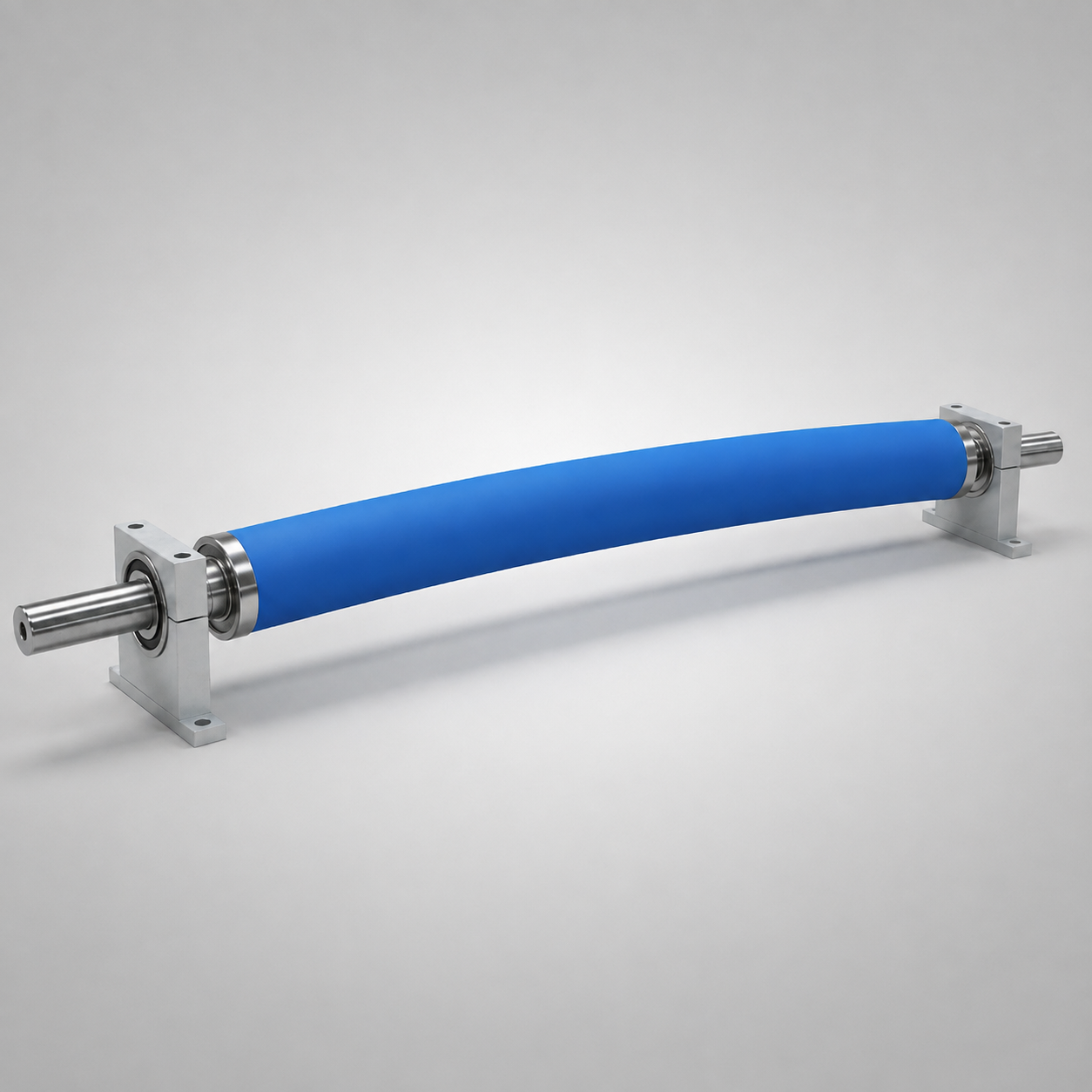
Bowed Rolls (Banana Rolls) · Manufacturing and Refurbishment

Bowed Rolls (Banana Rolls) for Stable Web Handling

When film, paper, nonwoven or textile web wrinkles during handling, a properly selected bowed roll helps spread the material across its width and stabilize the web path. We manufacture new custom bowed rolls and assess whether used components are suitable for refurbishment.

Banana roller for guiding and stretching the web
Manufacturing Process

How Does the Manufacture or Refurbishment of a Bowed Roll Work?

We start with information about the material, machine, and the problem occurring on the line. Only then do we define the design of a new bowed roll or the scope of refurbishment.

01 · Input Data

Dimensions, photographs, documentation, type of web material, and a description of the problem occurring on the line.

02 · Technical Analysis

We assess the roll design, installation conditions, operating parameters, and the required process result.

03 · Solution Definition

We define the geometry, working surface, mounting method, and required scope of work.

04 · Manufacture or Refurbishment

We carry out the agreed scope in accordance with the approved documentation and technical parameters.

05 · Inspection and Preparation for Handover

After completion, we verify the agreed parameters and prepare the component for further operation.

Do You Have an Existing Bowed Roll?

A Complete Drawing Is Not Required to Start the Analysis

Send photographs, basic dimensions, markings, a description of how the roll operates in the machine, or the existing roll for assessment.

SCOPE OF WORK

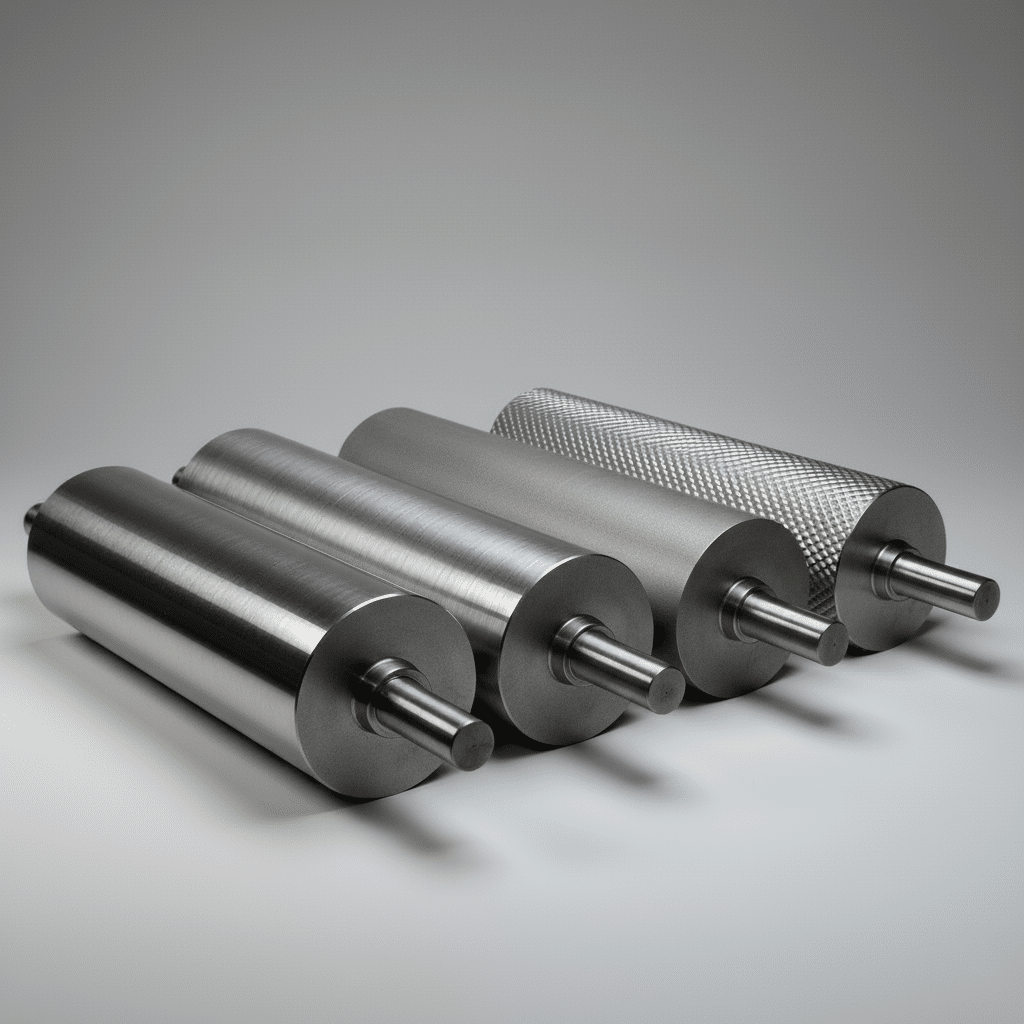
Which Bowed Rolls Can We Manufacture or Refurbish?

The starting point is not a ready-made catalogue option, but the material, system geometry and the problem occurring on the line. Based on this information, we determine the design direction for a new roll or the scope of refurbishment.

MANUFACTURING

New Bowed Rolls

Manufacture of a new roll based on technical documentation, agreed dimensions or a specification derived from its installation position and function in the machine.

Design Tailored to a Specific Application
REFURBISHMENT

Refurbishment of the Existing Bowed Roll

Refurbishment feasibility is determined after inspecting the roll design, rubber working surface, end connections and the components responsible for correct roll operation.

Scope of Work Confirmed After Inspection and Measurements
Geometry

Constant-deflection shafts

A variant for applications in which the roll geometry is defined for the selected material, web width and web path.

Bow Selected for the Defined Operating Point
ADJUSTMENT

Adjustable-Bow Rolls

A design that allows the bow to be adjusted within the specified range to accommodate changes in the material or web-handling parameters.

Adaptation to Changing Process Conditions
WORKING SURFACE

Rubber Working Surface

The rubber working-surface specifications are determined from the web material, the required contact with the web, line speed and operating environment.

Working Surface Tailored to the Application
FIT TO EXISTING MACHINE

Replacement Roll for an Existing Machine

The analysis can begin with the existing roll, photographs, basic dimensions and mounting method to determine the data required to reproduce the component.

End Connections and Mounting Included in the Assessment
HOW A BOWED ROLL WORKS

How Does a Bowed Roll Stabilize and Spread the Web?

Rotation of a properly configured bowed roll changes the web-guidance direction and helps spread the web from the centre toward the edges. This effect is used to reduce wrinkles, folds and unstable web tracking.

1. Contact with the Roll Surface

The web runs over the rubber working surface of the bowed roll.

2. Web Spreading

The bowed geometry helps direct the web from the centre toward the edges, reducing the tendency for wrinkles and folds to form.

3. More Stable Web Handling

A properly selected bowed roll helps maintain a more even web profile and stabilize the web path during machine operation.

4. Web Path Stabilization

Selecting the bow, wrap angle, and roll position helps maintain consistent web guidance.

Technical Specifications

Data Required to Select a Bowed Roll

The roll design is determined based on the material parameters, production line, and installation position.

Parameter Data to Specify Impact on Design
Web Material Film, paper, nonwoven, textile or other web material Affects the selection of the working surface and required traction.
Web Width Working width and its variation range Determines the required working length of the roll.
Line Speed Actual machine operating speed Affects balancing and dynamic-performance requirements.
Web Tension Typical and maximum load during operation Required for correct selection of roll geometry and system stiffness.
Length and Diameter Working dimensions and available installation space Define the basic roll dimensions.
Bow Geometry Fixed or adjustable bow and bow direction Determines how the web is spread.
Wrap Angle Angle of web contact with the roll surface Affects the spreading effectiveness of the bowed roll.
WORKING SURFACE Rubber type, hardness, surface structure and process requirements Selected for the web material and operating conditions.
Bearing Arrangement and Mounting Installation method, end connections and mounting points Allows the roll to be matched to the existing machine.
Operating Conditions Temperature, humidity, dust and process environment Affect material selection and component design.
Technical Selection

You Do Not Need a Complete Drawing

Basic dimensions, information about the web material, operating conditions and installation position are enough to begin the analysis. The documentation can be supplemented based on measurements and inspection of the existing component.

APPLICATIONS

Where Are Bowed Rolls Used?

Bowed rolls are used in web-handling systems when the material needs to be spread across its width, wrinkles reduced and the web path stabilized.

01 · WEB MATERIAL

Films

Guiding and spreading film before rewinding, laminating, coating or the next process stage.

02 · WEB MATERIAL

Paper

Stabilizing paper in rewinding, converting and transport systems between successive machine sections.

03 · WEB MATERIAL

Nonwovens

Spreading the material across its width where reducing folds and maintaining a stable web path are important.

04 · WEB MATERIAL

Woven Fabrics and Textiles

Even guidance of textile materials before further processing, winding or transport.

LINE SYMPTOM

What Is Happening to the Web?

  • web folds and wrinkles
  • edge lift or edge curl
  • uneven material distribution
  • unstable web path
ROLL CONSTRUCTION

Bowed Roll Construction: From the Working Surface to the Mounting System

A bowed roll is an assembly in which axle geometry, working surface, bearing arrangement and mounting method must work together as one system.

01 · Rubber Working Surface

The element in direct contact with the web.

02 · Curved Axle

The curved geometry is responsible for the roll’s characteristic spreading action.

03 · Bearing Arrangement

Allows the working surface to rotate while maintaining the axle geometry.

04 · Journals and End Connections

Matched to the roll design and the way it is mounted in the machine.

05 · Mounting Housings

The mounting method depends on the installation position and the design of the existing line.

06 · Bow Adjustment

Selected designs allow the bow geometry to be adjusted for different operating conditions.
Construction of a banana roller with a rubber working surface and mounting brackets
RESULT OF CORRECT SELECTION

What Does a Properly Selected Bowed Roll Provide?

The correct geometry, working surface and installation position help stabilize web handling before subsequent process stages.

01 · Reduced Folds and Wrinkles

The material is spread more evenly across its width before the next process stage.

02 · More Stable Web Path

A correctly set bowed roll helps reduce uncontrolled lateral web movement during handling.

03 · More Even Material Distribution

The web can be prepared more consistently for rewinding, coating, laminating or the next process stage.

04 · Better Conditions for Downstream Processing

More stable web handling helps maintain more repeatable operating conditions across the line.

ROLL DIAGNOSTICS

What Should Be Checked When a Bowed Roll Does Not Stabilize the Web?

The problem does not always mean that a new roll is required. First check the geometry, mounting, working surface and actual operating conditions.

01 · Symptom

Folds Remain in the Web

Possible causes include incorrect bow, insufficient wrap angle or an incorrect roll position in the web path.

Check: geometry · setting · wrap
02 · Symptom

The Web Moves to One Side

Check axle alignment, system symmetry, web guidance and the condition of mounting components.

Check: mounting · geometry · web path
03 · Symptom

Vibration or Noise Appears

Possible causes include worn bearings, excessive play, incorrect mounting or issues with the roll’s dynamic behaviour.

Check: bearings · mounting · roll condition
04 · Symptom

The Rubber Working Surface Is Worn

Cracking, glazing, localized wear or loss of surface properties can reduce contact between the roll and the web.

Check: surface · wear · refurbishment
TECHNICAL ASSESSMENT

Refurbishment or a New Bowed Roll?

The decision is made after assessing the design, working surface, geometry, bearing arrangement and whether the required parameters can be restored.

FAQ

Frequently Asked Questions About Bowed Rolls

Key information about selecting, manufacturing and refurbishing bowed rolls.

What Is a Bowed Roll Used For?

A bowed roll helps spread web material across its width, reduce the formation of folds and wrinkles, and stabilize web handling.

Can an Existing Bowed Roll Be Refurbished?

Yes, if the condition of the roll allows the required parameters to be restored. The refurbishment scope is determined after assessing geometry, the working surface, bearing arrangement and mounting components.

Is a Technical Drawing Required?

Not always. The analysis can begin from the existing roll, basic dimensions, photographs and information about the machine and web material.

What Determines the Required Roll Bow?

It depends on web width, web-path geometry, wrap angle, web tension, line speed and the roll’s installation position in the machine.

Do You Manufacture Bowed Rolls for Existing Machines?

Yes. The design can be reproduced based on an existing component, documentation, measurements and installation conditions.

What Materials Can Be Handled by a Bowed Roll?

Bowed rolls are used for film, paper, nonwovens, textiles and other materials processed as continuous webs.

What Data Should Be Sent for a Quote?

Send the roll dimensions, photographs, web material, web width, line speed, mounting method and a description of the problem.

Bowed Rolls · PROEXPORT

Do You Need a New Bowed Roll or Want to Assess Refurbishment Feasibility?

Send photographs, basic dimensions, information about the web material and a description of the problem. Based on this information, we can begin a technical assessment of the solution.